Search This Blog

Showing posts with label Sichuan. Show all posts

Saturday, October 20, 2012

Ma Po Tofu...the Mother Chen way!

It has been a long time between blogs and is been due to a host of reasons, which I won't go into as they are certainly not foodie related. I am back however and while I haven't been cooking a whole lot, I do have some "pearlers" of dishes waiting to be blogged.
Since the last post was Sichuan, I thought I might just keep the flavor going with another entry from Fuchsia Dunlop's "Land of Plenty" - the infamous Ma Po Tofu. This is a palate tantalizing dish that hails from the Sichuanese province and it has many stories that lay claim to is origin. In the book it is called Pock-Marked Mother Chen's Bean Curd - and I feel this reads as the most logical explanation. Mother Chen was a town cook whose face still bore the scars of a past bout with small pox. Her chilli bean tofu was renowned throughout the area and so the translated name of the dish was christened - Ma po dou fu - Dou fu is apparently the correct way to say tofu by the way!
I have grown a real fondness, of late, to bean curd in its many forms - I can thank my tofu loving foodie friend Miss A, for that.  The Koreans use a delicious spongy form cut into strips as part of a Bimbimbap meal, that I love to indulge in. There is also the custard-like, soft tofu drizzled with brown sugar syrup that feels almost too healthy to be a dessert. And I absolutely love the plump squares of fried tofu that soak up the juices in a spicy laksa.  The versatility of bean curd makes it a favourite ingredient of mine to use in Asian cuisine and Ma po Tofu just hits the spot with the inclusion of firm tofu as one of the key ingredients.
Fuchsia Dunlop's rendition from the famous Mother Chen instructs you steep the tofu in hot salted water and this is to ensure it holds its shape in the heat of the dish.  I have tried skipping this step to save time and the result is a dish with melted bits of tofu blending into the meat sauce which is not pretty at all.
Ingredients
300g x Firm Tofu, cut into cubes and steeped in hot salted water
500g x Beef Mince
4 tbsp x Cooking oil
4 tbsp x Chilli Bean Paste 
2 tbsp x Fermented Black Bean
4-5 x Spring Onions, cut into 1 inch pieces, extra to garnish
1-2 tsp x Chilli powder
1 cup x Chicken stock
1 tsp x Sugar
2 tsp x Light Soy Sauce
Salt, to taste, if required
4 tbsp x Cornflour, mixed with 6 tbsp x Cold Water
1 tsp x Ground roasted Sichuan Pepper
Directions
Heat a large wok on high with the oil and crumble in the mince
Stir fry continuously until the meat is well browned and the liquid almost dry
Turn the heat to medium and add the chilli bean paste stirring through for 30 seconds
Now add the fermented black beans and chilli powder and stir fry for another 30 seconds
Pour in the stock and bring to the boil then add the spring onions
Drain the tofu and add to the dish taking care not to smash the cubed pieces
Add the sugar, soy sauce and salt, to taste, swirling the wok gently to combine
Allow to simmer for 5 minutes then add the cornstarch mixture in thirds until the sauce has thickened to a desired consistency.  "It should just cling glossily to the meat and bean curd - Fuchsia Dunlop"
Place into a serving bowl and sprinkle the Sichuan pepper powder over the dish and garnish with extra spring onions


"I truly enjoy cooking and eating this dish.  The mellow texture of the tofu saturated with the spicy chilli bean flavoured oil and the overall tang really gets the taste buds singing.  Definitely a favourite from the Land of Plenty"


Tuesday, August 28, 2012

Fish Fragrant Eggplant...once again!!!

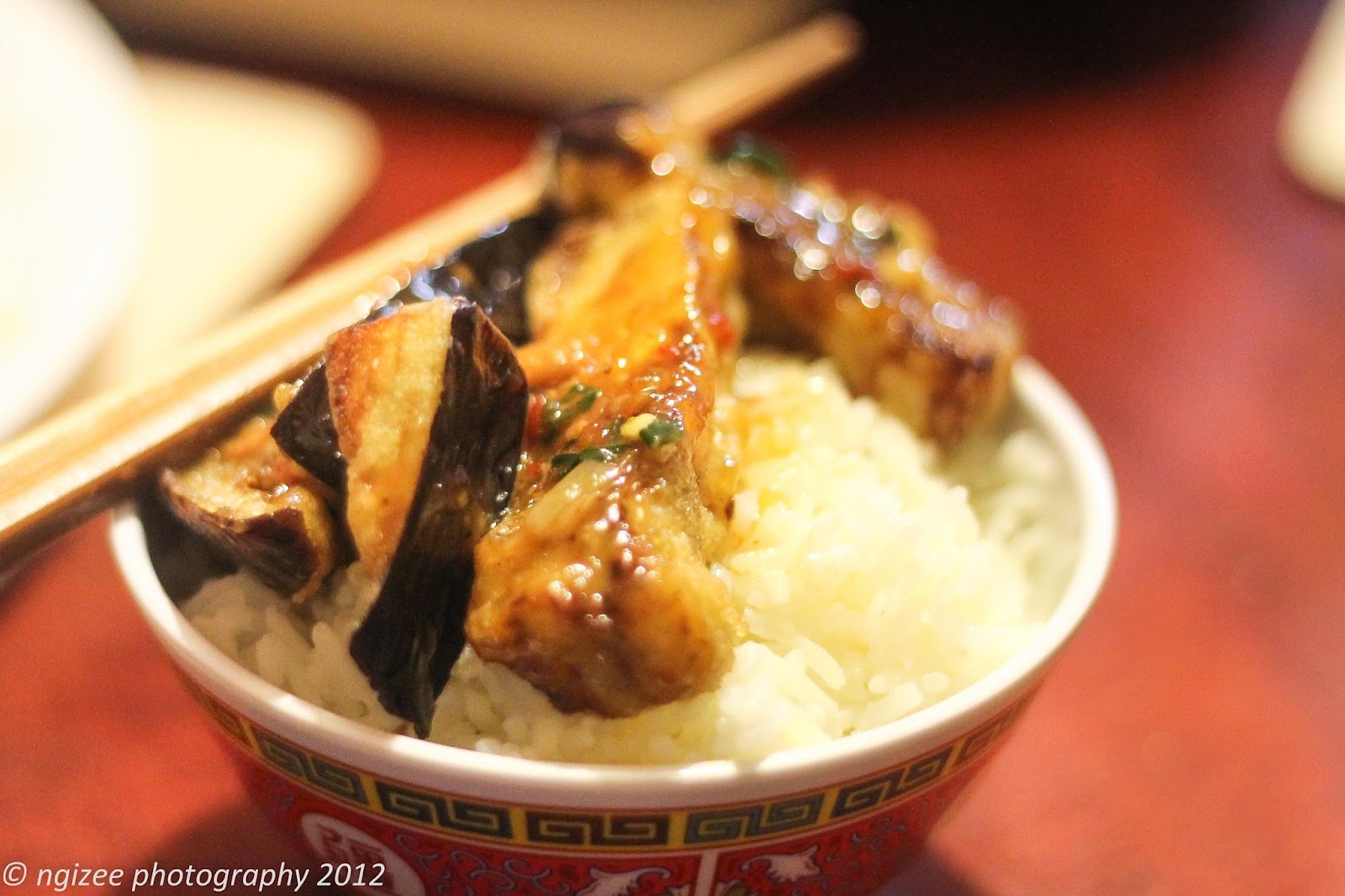
This recipe is a retake, blast-from-the-past, redux, if you may, of a dish that I have been trying to recreate for some time now.  My first encounter with this very intriguingly named dish was at Sichuan House, where they stack it higher than my little molehills effort in the pic above.  I have previously blogged on a version that I cooked up a few months ago.  Check it out at Fish Flavoured Eggplant - This version was tasty, no doubt, but not at all close to the Sichuan House version.  This time around however, armed with the arsenal that is Fuchsia Dunlop's book, Land of Plenty, I think I have hit closer to the mark and I thought I should share the recipe along with a couple of my tweaks to it.
The eggplant in this dish holds up it's crispiness after being deep-fried and the accompanying sauce is not too short of the true Sichuanese taste.  Given that eggplant is my most favourite vegetable...ever, it wont be long before I give this another try after sourcing some authentic Sichuan style Chilli Bean sauce.  The main varieties available contain salted soybeans, but the Sichuan type consists of fermented fava beans.  I will continue hunting, there are plenty of Chinese grocers in Melbourne.
Ingredients, serves 4
2 x Eggplants, cut into large wedges or "fat" chip shapes
1/2 cup x Potato starch or Tapioca starch (I have used cornflour previously but found the tapioca starch really worked well for the crunch that I was looking for)
Oil for deepfrying
1 1/2 tbsp x Chilli bean paste (Lee Kum Kee brand is acceptable but can be salty, adjust to taste and dilute final dish with water if necessary)
3 tsp x Ginger, finely chopped
3 tsp x Garlic, finely chopped
1/2 cup x Chicken stock
1 1/2 tsp x Sugar
1/2 tsp x Light soy sauce
1 tsp x cornflour mixed with 1 tbsp x Cold water 
1 1/2 tsp x Chinkiang Chinese Black Vinegar
4 x Spring onions, green parts sliced into fine rings
1 tsp x Sesame oil
Directions
Place the eggplant chips on a flat plate and sprinkle about a tablespoon salt over the surface. Leave to stand for 30 minutes while you prepare the rest of the ingredients. This is to draw out some of the liquid within the vegetable.
Heat the oil in a frypan or wok and allow to reach a good deep frying temperature (about 190 degrees celcius)
Wipe the eggplant pieces with kitchen towel to remove the extracted liquid
Place the tapioca flour (or potato flour) in a clean plastic bag along with the eggplant
Secure the opening and shake well to coat the eggplant in the flour completely 
Carefully fry the eggplant in batches for about five minutes until cooked through and crispy on the outside but not burnt
Remove with a slotted spoon, draining as much oil, and keep warm in a serving dish while you finish the sauce.
For the sauce, heat a wok with two tablespoons of the oil
Stir in the chilli bean paste for 30 seconds followed by the ginger and garlic for another 30 seconds 
Next combine the stock, sugar and soy and add to the dish, add a little salt to taste, if required, bring to a boil
Briskly whisk in the cornflour mixture and continue to stir until the sauce thickens
Now add the vinegar and spring onions and allow to cook for a few seconds  
Finally stir in the sesame oil and remove from the heat 

Pour the sauce over the fried eggplant chips and serve immediately to ensure the eggplants retain some of their crunch
This method with the sauce is listed as an alternative to the original Sichuan recipe in Fuchsia's book. I have tweaked it even further by adding the step of coating with tapioca flour. I prefer the beauty in the crunch of the eggplant when prepared this way, the tapioca gives it the edge, and is an ode to Sichuan House's tower of eggplant.
 The original recipe says to add the non-flour coated, deep-fried eggplant to the wok after the stock, sugar and soy mixture is brought to the boil.  Then it continues with the cornflour slurry, vinegar, spring onions and sesame oil.  I have prepared the dish in this method too, but found that the eggplant becomes far too mushy and the texture feast is missing as everything gets a bit soggy.  I have also had it prepared like so in other Sichuan restaurants but have always gone back to Sichuan House's version that has so much appeal - well for me anyways!!!


And in case you're wondering what is so fishy about a dish called Fish Fragrant Eggplant, which has no fishy ingredients at all, here is a little explanation from the book:- The fish fragrant flavour is one of the 23 flavours of Sichuan and get's its name from the seasonings used in traditional cooking of fish. It has a combination of salty, sweet, sour and spicy tastes and is heavily aromatic from the abundance of ginger, garlic and spring onion.  The sauce's orange colour is derived from the base ingredient of Sichuanese chili bean sauce which is also typical in the cooking of fish dishes.  

Monday, August 27, 2012

Kung Pao Chicken

My love for Sichuan food sent me on a Google search for cookbooks that could broaden my, shall we say, repertoire.  It was only then that I discovered Fuchsia Dunlop, who is very much considered to be the authority on Sichuan cooking, well in the Western world anyway.  She has penned a few books on the subject, having studied the culinary art in the Sichuan province - and she is quite the expert.  
I finally received my copy of Fuchsia Dunlop's Land of Plenty in the mail (It took a while getting here from the UK).  It's not your regular glossy cookbook, however.  Rather, it is quite reminiscent of a high school text book.  Lots of black and white pages and very few pictures - the kind you would scribble doodles on during those classes when boredom struck.  The first eighty or so pages are made up of a lengthy introduction and then a walk through the cutting techniques and ingredients in a typical Sichuanese pantry. To say the least, I have been so engrossed in reading the book that I figured it was time to try a recipe.
Kung Pao or Gung Bao Chicken is a dish I only discovered by chance at an impromptu take away fix a couple of years ago.  I have been making the dish ever since and absolutely love it.  The flavours of the soy and rice wine in the dish meld together in a smoky aromatic finish that fills the air well before the liquid hits the wok.  As with most Chinese cuisine, the preparation stage is always the most time consuming.  But the reward is far greater than the time spent - well for me anyways!  
Ingredients, serves 6
6 x Chicken Thigh Fillets, cut into 1cm cubes
6 x Garlic cloves, finely sliced
2" piece x Ginger, finely sliced
10 x Spring onions (scallions), white parts only cut into 1" lengths
2 tbsp x Peanut Oil
12 x Dried Chilli, snip in half and discard seeds
2 tsp x Sichuan Pepper
2 handfuls x Peanuts or Cashews, roasted 
Marinade
1 tsp x Salt
4 tsp x Light Soy sauce
2 tsp x Shaoxing wine
3 tsp x Cornflour
2 tbsp x Water
Sauce
6 tsp x Sugar
5 tsp x Cornflour
2 tsp x Dark Soy sauce
2 tsp x Light Soy sauce
6 tsp x Chinese Black Vinegar 
2 tsp x Sesame Oil
2-4 Tbsp of Water, as required
Directions
Combine marinade ingredients in a large bowl and toss through the cubed chicken pieces
Marinate for at least 1 hour
Place all sauce ingredients into a pouring jug and stir to combine
Heat the oil in the wok until it is just about to start smoking
Add the halved and deseeded chilli and Sichuan pepper and stir fry for 30 seconds
Tip in the marinating chicken and stir fry for about 5 minutes
Now stir in the spring onion, ginger and garlic and stir fry for another 5 minutes


Pour in the combined sauce ingredients

Stir through for two minutes, taste and adjust salt if required
When the sauce thickens slightly add the peanuts or cashews 

 Stir through for a minute 

 Remove from wok an place in a serving dish

 A dish as flavoursome as Kung Pao chicken can only be complimented with a bowl of Jasmine rice....ahhh delicious!


Sunday, May 20, 2012

Review: Flavour Town Hotpot, Melbourne CBD

Flavour Town Hot Pot 滋味堂 on Urbanspoon

Blink, and you might miss the entrance to Flavour Town Hotpot. A tiny doorway at the bottom of a staircase leads you up to the restuarant on the first floor of 202 Bourke Street. (You could take the elevator if you feel so inclined, but be warned - its slow) You enter the pretty modern-esque looking restaurant with a bar up front, where you are greeted and taken to your seats - big groups up to twelve would need to book ahead for a large round table and there are plenty of booth seats for four to six people.
As you are seated you are given the printed out order sheet that you make your selections from. Begin with your choice of broth base: choose from bases of spicy chicken broth partnered with a mushroom one or a spicy Sichuan on one side and pork bone broth on the other. For those less tolerant of chilli and spice, the standard non-spicy broth is recommended.  The big wok is brought out first and the tabletop stove is lit and you anxiously wait for it to boil.

A Yin Yang of deliciousness - Spicy Sichuan and Pork Bone broth (including the bone)


Next, choose a from a variety of sauces that are added to your broth to add more depth of flavour.  We chose three most distinct sauces - Sesame paste, which was like tahini but only much more mellow and thinner; Hot chilli and garlic, because too much chilli is never enough. Finally an umami sensation thai style sauce.  While we didn't add the sauces to the main broth in the yin yang wok, we added them by the spoonful to our own serves.  Each sauce added a different character to the final dish and surprisingly, they worked well together to deliver a flavour punch as well as on their own.

There are some entree choices available too and some of them, like the taro wrapped prawn, do not require a dunking in the broth. Other popular choices for starters are pork and chive dumplings and also fish dumplings (although the do not look like dumplings) Be warned, the dumplings are suspiciously the store-bought, frozen kind. However, what they lack in freshly-made quality, they more than make up for when boiled in the broths - almost like a very very flavoursome won ton soup.

Now you can be very selective when ordering the ingredients that will be added to your broth to make it into a unique hotpot.  Thinly sliced meats, like pork, lamb, beef and chicken are a must at this carnivore's hotpot meal, but I recommend venturing into seafoods, like prawn and calamari.  Whole baby octopus is also quite a treat.  In the vegetable section you can put a tick against classics like tofu, enoki mushroom, bok choy and water spinach.  And if you need a carbohydrate hit, then there are couple of rice and noodle choices - the potato noodles are well worth a try.  One thing to be aware of, I found was that meats, seafood and veg all take different times to fully cook and be at their best in a boiled dish like this.  Definitely do not, leave the thin slices of meat in the broth for more than a couple of minutes, and prawns are done when they turn orange.
Getting Steamy!!
Flavour Town  Hotpot was a nice way to warm the insides on a cold, cold autumn night, and as long as you do not mind cooking your own food then you are in for a good meal.  The restaurant staff were very hard to get a hold of for extra items, and even requests for a fork seemed to fall on a number of waitresses'deaf ears.  There was no rice available that night (they apparently ran out), but I only found this out when I inquired about it well in to the meal after we had ordered a bowl.  The manager was very apologetic and said that they would work on providing better service in the future.      


The tasty broths and combination of the flavour full sauces are what made the meal so good.  Hotpot seems like an easy concept, but it would be very easy to fail to please by producing tasteless broths.  At Flavour Town, they got it right and while I haven't been to many hotpot places, I couldn't imagine them being too different...I may just have to try some more to see for myself...don't mind if I do!

Tuesday, February 21, 2012

Fish Flavoured Eggplant - Sichuan Style

 Eggplant has by far my favourite vegetable at the moment.  It has found it way to the top of my hit list thanks to places like Pepper Chilli, Chilli India and Sichuan House including it in some very mouth watering dishes on their lunch menus.  I have also adapted some of the eggplant dishes I have tasted and come up with my versions of Baingan Bharta - a spicy eggplant mash, and my mother-in-laws recipe for Shutki Baigan - eggplant with dried fish.  One of the dishes I most look forward to at Sichuan House is their fish flavoured eggplant concoction.  This dish has a very spicy, yet sweet sauce that coats the eggplant that is shaped like chips.  The most unique thing about the eggplant is crunch that you get when you sink your teeth into the saucy chips. Well my version does not achieve this level of crispiness - probably because I do not have an industrial strength deep fryer the get the crunch to precision.  What is lacking in crunch is definitely made up  for in the taste as fish flavoured eggplant is sure to please.  Something noteworthy is that nothing fishy goes into this dish yet it is named so.  I found out that the named derived from the preparation of a fish dish with similar ingredients.  Lost in translation somewhere it became known as Fish Flavoured Eggplant because it's probably easier to read on a menu than "Eggplant made with ingredients from a fish dish that gives it a fish flavour".  This recipe includes carrot and zuchinni that is diced and combined with the sauce to give it more body and some crunch.  Feel free to omit these if you want to stay true to the Sichuan house version, where it is all about the eggplant.
Ingredients
500g Eggplant, cut into chip-like pieces (this is done quite easily with long Asian eggplants)
1 tsp x Sichuan Pepper. lightly toasted and ground, reserve ½ tsp to sprinkle at finish
1 x Egg, beaten
100g x Cornflour, reserve a tsp mixed with equal water to thicken sauce 
Oil to deep fry
1 Tbsp x Ginger crushed
2 tsp x Garlic, crushed  
1 x Carrot, finely diced (optional)
1 x Zuchinni, finely diced (optional)
For the sauce
¼ cup x Chicken stock, reserve extra stock for increasing sauce quantity if desired
2 Tbsp x Chilli Bean Paste
1 tsp x Dark Soy
2 tsp x Light Soy
2 Tbsp x Black Vinegar
2 Tbsp x Shao Xing Wine
2 Tbsp x Tomato Ketchup
1 tsp x Brown Sugar
Spring Onions to garnish
Directions
"Some recipes omit the deep frying of the eggplant and just flash fry them in a hot pan before adding to the rest of the sauce ingredients to finish the dish  I have tried this way and have not enjoyed it as the eggplant does not hold its shape and the dish can become quite mushy in texture.  My taste testers also voted in favour of the deep fried eggplant.  As bad as it sounds to deep fry, my technique has always been to get the oil to an optimum heat of 190 degrees celcius as this will ensure and even coat of crunch and not allow for too much saturation of the oil.  I usually find I am left with almost the same amount of oil as I started.  Use a deep saucepan and a thermometer - it does sound finicky but is well rewarded."
Prepare the sauce first by combining all ingredients in a bowl and keep aside.
Heat a wok until very hot then swirl in a table spoon of oil followed by the ginger and garlic
Stir for half a minute then add the diced vegetables and fry for 2 minutes 
Now add half a teaspoon of ground Sichuan pepper and the prepared sauce and stir well to combine
Add extra stock if desired and sprinkle the extra Sichuan pepper to taste, adjust seasoning 
Whisk in the cornflour slurry and bring the sauce to a boil until it thickens slightly
Remove from heat an rest while you prepare the eggplant
Combine the cornflour and ground sichuan pepper in a plastic bag 
Dip the eggplant chips in the beated egg and then place in the plastic bag and shake
Do this in batches so the eggplant is evenly coated in the cornflour mix
Heat oil in a saucepan or deep fryer, use a thermometer if possible to determine when the oil is at 190 degrees celcius
Fry the eggplant in small batches until golden, then drain well on absorbent paper
Bring the sauce to the boil again and add in the fried eggplant
Fold gently to coat the eggplant with the sauce
Add a sprinkle of Sichuan pepper powder to finish
Garnish with sliced spring onions and serve immediately on steamed rice
To keep in the Sichuan style of things I added a quick spicy dish to tonights menu courtesy of another food blog click to navigate to the blog for the recipe,


Tuesday, January 3, 2012

Sichuan Style Chicken...mmm Spicy!


It has certainly been a while between posts but it has been a crazy last couple of months for me, capping off 2011. 
So firstly Happy New Year! I hope 2012 is prosperous and filled with all things good, especially foodie goodness. My absence has been a combination of a few things - being extra busy at home, cooking and eating without blogging, a back injury, hospital stay for a week, recovery in bed and being on a diet of pain killers is hardly enough inspiration to bring myself to blog.
I am on the mend now so I'm back. I still walk with a limp but was today finally able to stand (in the kitchen) for long enough to prepare and cook a meal for the family. So to commemorate my return to the cooktop I felt it best to pick up where I had left off - in the world of Sichuan cuisine. 
Paying homage to the fiery crispy chilli chicken dish from Pepper Chilli here is my rendition. I have taken the crispy out of my recipe as I just cannot achieve the crunch that I remember so well when I ordered this dish from Pepper Chilli. The taste explosion is definitely there though, and you can really put some kick into the dish by the amount of chilli you use. This recipe combines dried chilli flakes, cayenne pepper powder, fresh chilli paste and chilli sauce - each adding a different element to the final taste, which you can choose to serve with the abundance of whole dried chillies as done so at many Sichuan haunts - but today I didn't, so you will notice their absence in the pictures that follow.

Ingredients, to serve 4-5 with steamed rice.

  • 1 x Whole Chicken, approx 1.2kg, skin removed 
  • 2 x Egg Whites, beaten in a large mixing bowl
  • 2tbsp x Cornflour
  • 2tsp x Chinese 5 Spice powder
  • Oil for deep frying
  • 1 x Carrot, Red Capsicum, Zucchini (Courgette)
  • 1 x Brown Onion, diced finely
  • 6-8 x Sichuan Peppercorns, toasted and crushed to a powder
  • 2tbsp x Tomato Sauce (to glaze)
  • Spring Onions or Chives to garnish
For the sauce combine the following in a bowl and set aside
  • 1tbsp x Chilli Paste (Sambal Olek)
  • 1tsp x Cayenne Pepper Powder (less if you prefer it milder)
  • 1tsp x Chilli Flakes (less if you prefer it milder)
  • 2tsp x Chilli Sauce of your choice, (I used Siracha)
  • 1tbsp x Crushed Ginger
  • 2tbsp x Shao Xing wine
  • 2tbsp x Sesame Oil
  • 2tbsp x Brown Sugar
  • 1tbsp x Dark Soy
  • 1tsp x Worcestershire Sauce


Directions
Cut the chicken down into as many small pieces as you can, use a cleaver to chop through the bones.
Combine the cornflour and 5 spice powder with the beaten egg whites then stir in the chicken pieces.

Set aside to marinate while you prepare the vegetables
Peel the carrot and cut into strips then into small dice, do the same for the capsicum and zucchini.
Heat enough oil in a wok to deep fry.

In batches, fry the chicken until cooked through (about 4-5 minutes per batch)
Drain cooked chicken pieces on absorbent paper and set aside

Remove all but 2 tablespoons of oil from the wok and bring to high heat
Stir fry all diced vegetables including the onion for 3 minutes
Add the sauce and stir through a little water to thin out slightly
Return the cooked chicken to the wok and fold gently to coat with sauce, add a little more water if necessary
Bring to the boil and add the tomato sauce, cook for 1-2 minutes
Sprinkle the Sichuan peppercorn powder and stir through
Garnish with spring onions and serve with steamed rice

"This dish is sure to pack a punch, and depending on your chilli additions it is sure to satisfy any chilli addicts palette. You can substitute the chicken for white fish fillets or even prawns for a different take.
For a (dare I say) healthier option use lean breast chicken strips and omit the battering and deep frying. Just add to the wok when the sauce is boiling and cook until done."