Search This Blog

Showing posts with label Stew. Show all posts

Thursday, August 9, 2012

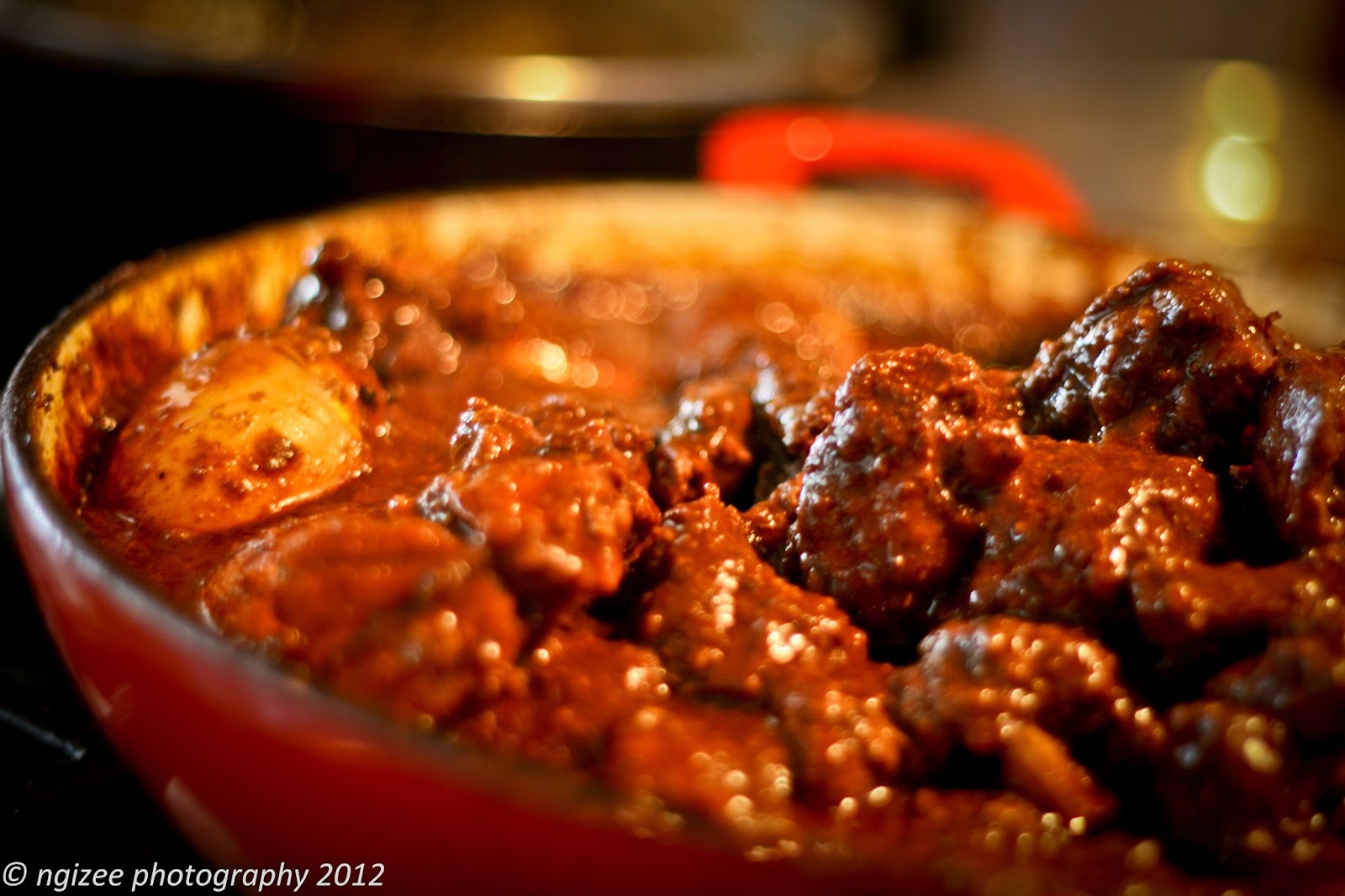
Doro Wats - Spicy Chicken Stew from Ethiopia


So without any further say or do here is the recipe to what many consider the national dish of Ethiopia. And after cooking this stew and sampling it's exquisite deliciousness - all I have to say is that more national dishes should be like this one. This deep bodied stew is so full of flavour. It gets its dark red appearance from the loads of paprika in the Berberé powder, that is essentially the soul of the dish. Doro wats have a huge spicy kick that will knock your taste buds for a six. The Ethiopian eating experience is only further enhanced by pairing the unique flavours of this dish with the equally unique Injera bread. The slighty tart, sourness of the flatbread compliments the pungency of the stew perfectly.  I highly recommend tracking down a supplier in your neck of the woods.
Ingredients, serves 6 as part of a shared meal
1.5 kg x skinless Chicken thigh fillets, cut into bite size pieces
Juice x 1 Lemon
1tsp x Salt
2 x Onions, finely chopped
4 x Garlic cloves
2-inch piece x Ginger
60ml Niter Kibbeh
2tbsp x Paprika
4-5 heaped tbsp x Berberé powder
1 cup x Chicken Stock
½ cup x Red wine
1 tsp x Cayenne pepper
Salt and pepper - to taste
4 - 6 Hard-boiled eggs
Directions
Marinate the chicken pieces with the lemon juice and salt for about 30 minutes.
Puree the onions, garlic and ginger in a food processor, adding a little water if necessary.
Heat the niter kibbeh in a heavy pot over medium heat.
Add the paprika and stir well to color the oil for about 1 minute making sure not to burn the spice.
Now stir in the berberé paste and cook for another 2 to 3 minutes.
Add the pureed onion, garlic and ginger and sauté for about 5 minutes stirring to cook down the onions
Pour in the stock and wine and bring to a boil
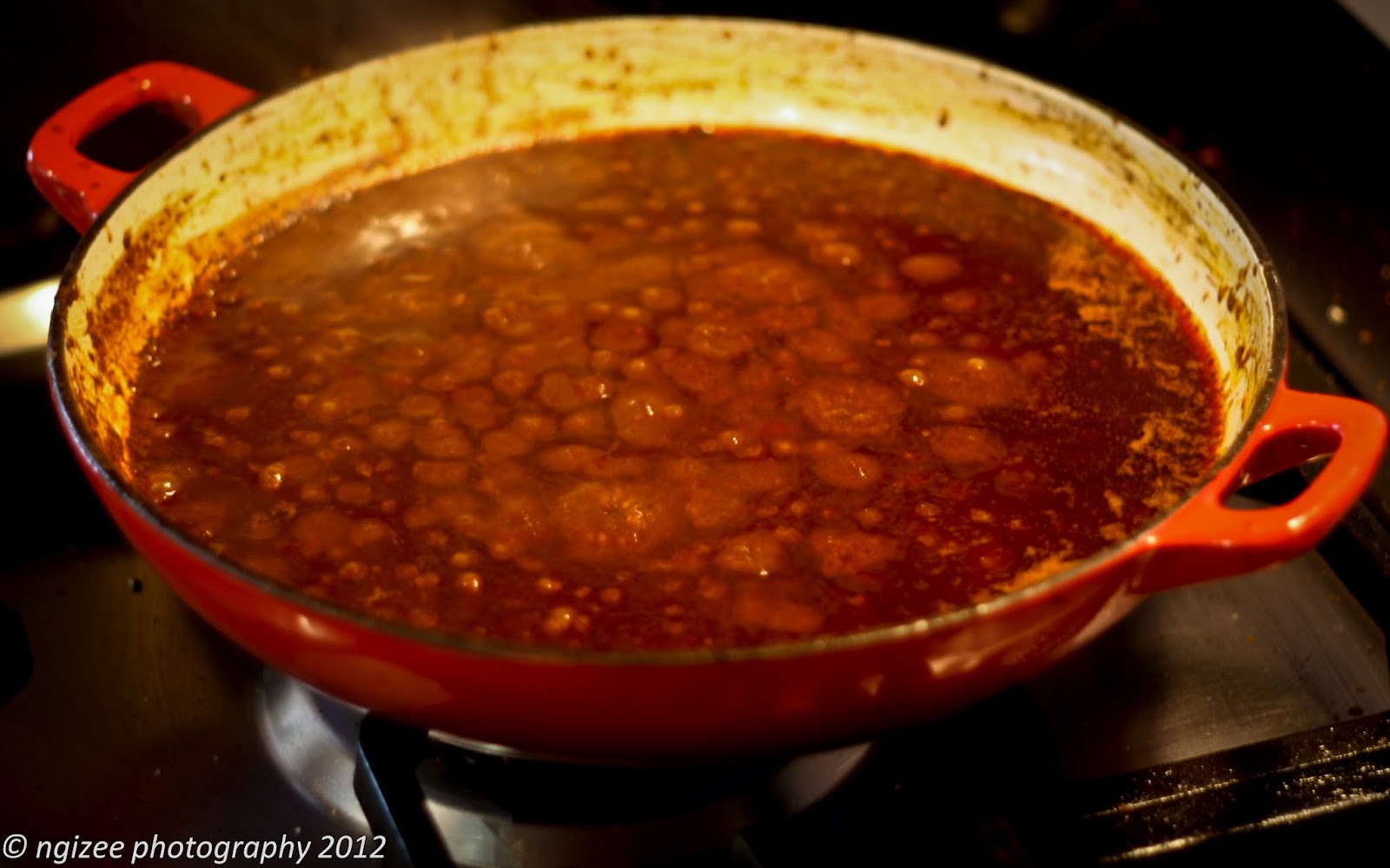
Next add in the marinated chicken pieces and stir to combine
Sprinkle in the cayenne pepper and season with salt and pepper.
Bring back to a gentle boil then reduce heat to low, cover and simmer for 45 minutes or until the chicken is very tender
Add a little extra water if the sauce begins to dry during the simmering stage, this dish needs a rich and thick gravy
Add the whole hard boiled eggs in the final 5 minutes and check seasoning
Serve hot dolloped directly onto the injera bread.
Roll up additional loaves of injera into scrolls and serve slightly warmed


A variation for vegetarians is to replace the meat with eggplant and zuchinni and cook for about 20 minutes - use veggie stock of course!
By far, one of the most unique tasting dishes that I have ever cooked and definitely a speciality.

Tuesday, August 7, 2012

Berberé and Niter Kibbeh - prelude to Ethopian Stew


One of my favourite foodie haunts as mentioned previously is the western suburban town of Footscray (West of Melbourne that is). In addition to the huge Vietnamese quarter of Footscray is the much more recently populated African quarter. Along the main shopping strips of Footscray, more and more restaurants pop up that allow you to venture (bravely and sometimes blindly) into the showcase of another worldly cuisine. Sometimes, the discovery of a new dish can really inspire a foodie like me.
Ethiopian food is one of the first of these that I have ventured out to try and I must say that I found it to be quite a unique experience. I dined at Harambe on Nicholson Street some time back and was delighted in the different style of cooking and taste that traditional Ethiopian food brought with it. I definitely have plans to revisit Harambe with a camera to capture what is undoubtedly a feasting event as they spark up the buffet and entertainment on weekend nights. Watch this space for a review blog, but for now, here is my take on an amazing Ethiopian dish – Doro Wat (Spicy Chicken Stew)
These curry or stewed dishes are often served quite uniquely on a large pancake like bread, indigenous to that part of the world, called Injera. I can assure you that any attempt to make this bread at home could result in major flaws and disappointment as it will never be the same as that from an authentic Injera bakery. (If you can do it - I take my hat off to you - and I'm coming over for some!) This flatbread is made from fermented wheat, pretty much on the same lines as sourdough. Luckily, Footscray has no shortage of bakers that supply Injera so without any hesitation, I recommend purchasing some, as this meal is just not the same without. If you have any Middle Eastern grocers in your locality they may stock it or know of where to purchase it.

To achieve true Ethiopian flavour there are two components that need to be part of this dish and this post is dedicated to those ingredients that I believe are crucial to making a good African stew, especially Doro Wats.  The first is a pungent and fiery red powdered spice mix called Berbere.  As always, with enough due dilligence, you are bound to find some ready made at your friendly African grocer - and I definitely am suggesting you get some if you do not have an extensive spice collection as mine.  But if you have all of the fifteen parts that make u this Berbere powder, then you are halfway there.

For the Berberé½ x tsp Allspice powder
1 x tsp Cardamom powder
½ tsp x Cinnamon powder
½ tsp x Cloves powder
1 tsp x Coriander powder
1 tsp x Cumin powder
1 tsp x Fenugreek powder
½ tsp x Nutmeg powder
1 tsp x Black pepper, crushed
½ tsp x Turmeric powder
3 tbsp x Cayenne Pepper (add more if you like it spicy!)
5 tbsp x Smoked Paprika
1 tbsp x Salt
2 tbsp x Ginger powder
2 tbsp x Garlic powder
Directions

Use a heavy based frypan over medium heat and toast the dry spices for a few minutes until aromatic. Be sure to shake the pan continuously to prevent the spice mixture from burning. Once the Berberé is cooled you can run it through a spice grinder to get a nice consistency in texture if you wish.

Niter Kibbeh is is a well seasoned clarified butter used in Ethiopian cooking. You may substitute with ghee (from Indian grocers), but it just would not be the same. The aromatics that are steeped in the hot butter as it clarifies really sets this ingredient apart from any substitution. 

For the Niter Kibbeh
500g x Unsalted Butter, cubed
2 x cloves of garlic, chopped finely
1" piece x Ginger, chopped finely
1 x Small Onion, diced finely
½ tsp x Turmeric powder
½ tsp x Cardamom powder
¼ tsp x Nutmeg powder
¼ tsp x Fenugreek powder
1 x Cinnamon Stick
2 x Cloves
Directions
Melt the butter in a saucepan over medium heat
Bring butter to a slight boil, the moisture in it will start to cook off
Now add the chopped garlic, ginger and onion
Stir for a minute and do not allow the ingredients to burn
Now add all the dry powdered and whole spices
Reduce heat to low and simmer for about 45 minutes without stirring
The milk solids in the butter will sink to the bottom of the pan and clarified butter will rise to the top
Strain the liquid discarding the milk solids and spices
Allow the clarified butter to cool and store in the fridge to solidify for use

"You now have the Berberé and Niter Kibbeh and you are set for the Doro Wats click on the link below to go to the recipe
Doro Wats - Spicy Chicken Stew 
"I have to give credit to www.congocookbook.com, from where I have adapted these recipes from. By the way this is a great website for all things African…foodie speaking of course."

Thursday, August 11, 2011

Nehari & Daal Puris - Meat Stew with Fried Bread

Here is one of my favourite dishes that hails from Pakistan and is also very much at home where I am from in India.  Nehari is a meat stew that is traditionally cooked overnight and usually consumed for breakfast with unleavened bread.  The name Nehari has associations with the early hours of the morning as it was the first meal that would be eaten after sunrise prayers.  Restaurants in Pakistan and India begin the cooking process after the night’s service and their big pots of stew would simmer all night.  As this delicacy is enjoyed not only by the devotees after their religious obligations it does sell out quite early before the morning rush.  You have to be quick to get a serve.  Back home in Kolkata, India, when I was a lot younger, I have memories of my Nana doing the early morning chore (She probably would still do it). Before the sun would rise she would be in that queue with her carry home pot.  When we woke up we would be greeted with the distinct aroma of Nehari and its staple companion in Kolkata – Daal Puris (pronounced ‘poorees’).  These are delicious deep fried breads that are filled with lentils. 
Nehari can contain a variety of different meats – they are usually the off cuts and bones that are slow cooked all night to impart all the flavour and render the meat to its tender goodness. Cuts that can be used in Nehari  can range from Beef soup bones (usually the chuck bones), Lamb Shanks and bones, Osso Bucco and Beef Ribs.  The inspiration that I needed to get this dish on the hob was some fresh cuts of Ox Tail that my local butcher was displaying on a recent visit.  The Ox tail alone would be enough to flavour the dish, but when we do Nehari at our place it is a communal gathering where it is always the more the merrier.  So to boost the flavour and meat content I picked up some Beef Asado (part of the rib).  My theory is as long as you have about 2 kilograms of meat and bones – more bone than meat – you have the base of a good Nehari.  In the case of this particular batch we had enough to feed 10+ people and also plenty leftover.
The Daal Puris are my dad’s speciality – he has perfected his recipe for it over the years and on a Nehari occasion I will provide the soup, he brings the bread.  I will have to get my dad to possibly guest blog for me with his recipe for the Daal Puris so stay tuned for that.  We prepare the lentils the night before and refrigerate the mix so that it is easier to work with the next morning.  Unlike the street sellers of the sub-continent I do not cook my Nehari all night, rather, I get the pot simmering just before I start the current night’s dinner and that way it’s on the hob for about 3 hours which is about sufficient – trust me!
This is a very special dish and while the list of ingredients is quite lengthy, I do urge you to get the right spices to get the best tasting Nehari this side of Kolkata.  If you have Indian or Pakistani friends, chances are they or their parents may have some of the more obscure ingredients.  I am sure they would be happy to part with a tablespoon of spice for a take away bowl of the good stuff.  Go on bribe them!
Ingredients:
1kg x Beef Asado, cut into chunks and sealed
1kg x Ox Tail (Or 1 or 2 Osso Bucco pieces), sealed
4 x Onions, sliced
1 Tbsp x Oil
1st Spice Mix: Combine these in a bowl ready to add to the meat.
1 cup x Plain Yoghurt
4 Tbsp x Garlic Paste
4 Tbsp x Ginger Paste
4 tsp x Garam Masala
1 Tbsp x Ginger Powder
8 x Green Cardamoms, bruised so they split open
4 x Black Cardamoms
4 x Bay Leaves
2 x Cinnamon Sticks
2 tsp x Chili Powder
1 tsp x Turmeric Powder
1 Tbsp x Salt 
2nd Spice Mix: These are added just before the water, combine in a bowl for ease 
4 Tbsp x Ground Fennel
1 tsp x Nutmeg Powder
1 Tbsp x Black Salt
3 Litres x Water  
2 Tbsp x Flour mixed into a slurry with -
5 Tbsp x Water  
Garnishes:
Ginger - cut in to thin matchstick slices
Coriander Leaves - finely chopped
Chillies (Red & Green) - sliced
Lemon or Limes - quarters for squeezing
Directions
In a tablespoon of oil fry the onions gently until they are golden brown.
Remove from the pan and allow to cool.  Blend the fried onions to a puree in a food processor. Keep aside.
Pour all ingredients from the 1st Spice Mix to the stock pot and increase heat stirring continuously. 
Add in the pureed onion prepared earlier.
When the mixture starts to bubble add the reserved sealed meats and bones and bring back to the boil.
Mix in the ingredients of the 2nd Spice Mix and stir through to combine then add the water 1 litre at a time stirring through.
Bring to the boil then lower heat and simmer with a lid on the pot for 3 hours.
Just before serving bring the pot to the boil again and add the slurry of flour and water.  
Stir well to fold the mixture through.  This will not thicken the soup to a gravy but it will impart a bit of colour and an added textural flavour.


Serve hot with garnishes of your choice and eat with fresh hot Daal Puris (Where is the recipe Pa???).  I dare say "store bought" naans
Tip: My Nehari is cooked the night before and allowed to cool on the stove top.  If you have a particular warm kitchen or its a warm night, then I recommended to refrigerate so that it does not spoil.